
Service: Closed-Loop Water Treatment & Filtration Optimization
Industry: Commercial / Industrial Facility
Location: Quebec
Project Overview
A client operating a closed-loop HVAC system was experiencing persistent turbidity, elevated iron levels, and excessive particulate contamination throughout the network.
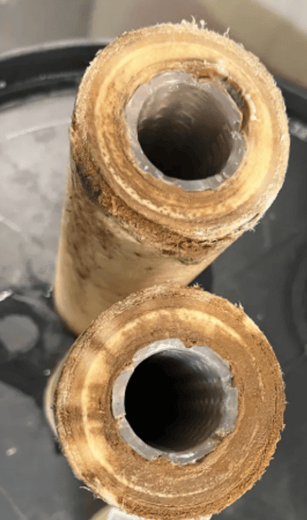
After an extended period without proper monitoring, iron oxide particles had accumulated throughout the system. Filter cartridges were heavily loaded with orange-brown iron deposits and were plugging prematurely, reducing filtration effectiveness and increasing maintenance requirements.
Initial testing revealed that the majority of contamination consisted of extremely fine colloidal particles that were too small to be effectively captured by standard filtration alone.
The goal was to restore water quality, reduce iron contamination, and improve overall filtration performance without major system modifications.
The Challenge
The issue wasn't simply the presence of iron, it was the size of the particles.
Laboratory analysis showed that nearly 69% of the total particle volume was concentrated in the 5–20 micron range. These fine colloidal particles remained suspended in the water, contributing to turbidity and allowing contamination to circulate throughout the HVAC system.
As a result:
- Iron oxide deposits continued to accumulate
- Filter cartridges experienced premature clogging
- Water clarity remained poor
- Standard filtration struggled to remove the finest contaminants
The client needed a solution that could remove these difficult-to-capture particles while improving overall system cleanliness and reliability.
The Game Plan
Step 1: Understand why filtration wasn't working
The existing filtration equipment was functioning as designed, but the particles causing the problem were simply too small to be efficiently captured.
Rather than replacing equipment, the focus shifted to making the particles easier to filter.
Step 2: Transform colloidal particles into filterable particles
WMC Water implemented a filtration aid program that introduced a coagulant upstream of the existing filter cartridges.
The coagulant caused the fine colloidal iron particles to agglomerate together, forming larger macroflocs ranging from 50–100 microns in size.
These larger particles could then be readily captured by the existing filtration system.
Step 3: Monitor and verify results
The program was monitored over a 10-week period through field measurements and laboratory analysis.
Iron levels, turbidity, particle counts, and particle size distribution were tracked throughout the process to confirm performance and ensure the treatment was achieving the desired results.
The Outcome
The results demonstrated a significant improvement in overall system water quality.
The program achieved:
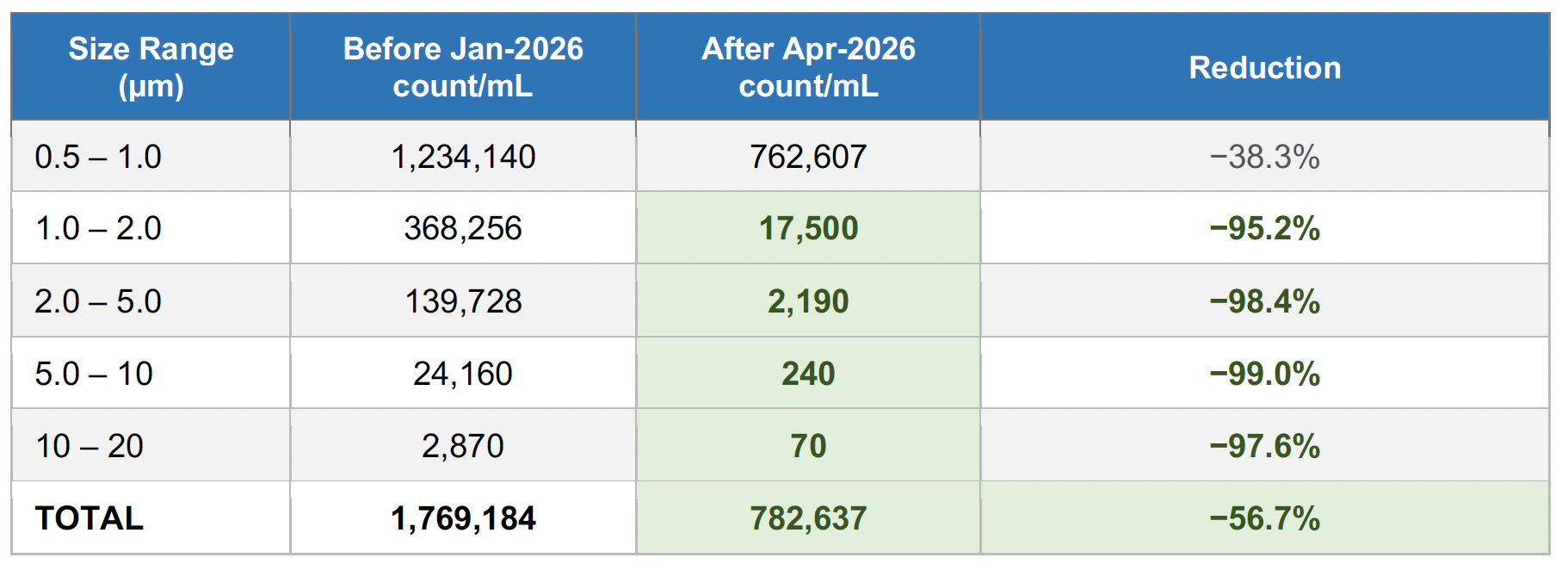
- 56.7% reduction in total particle count
- 95 - 99% reduction in problematic 2 - 20 micron particle fractions
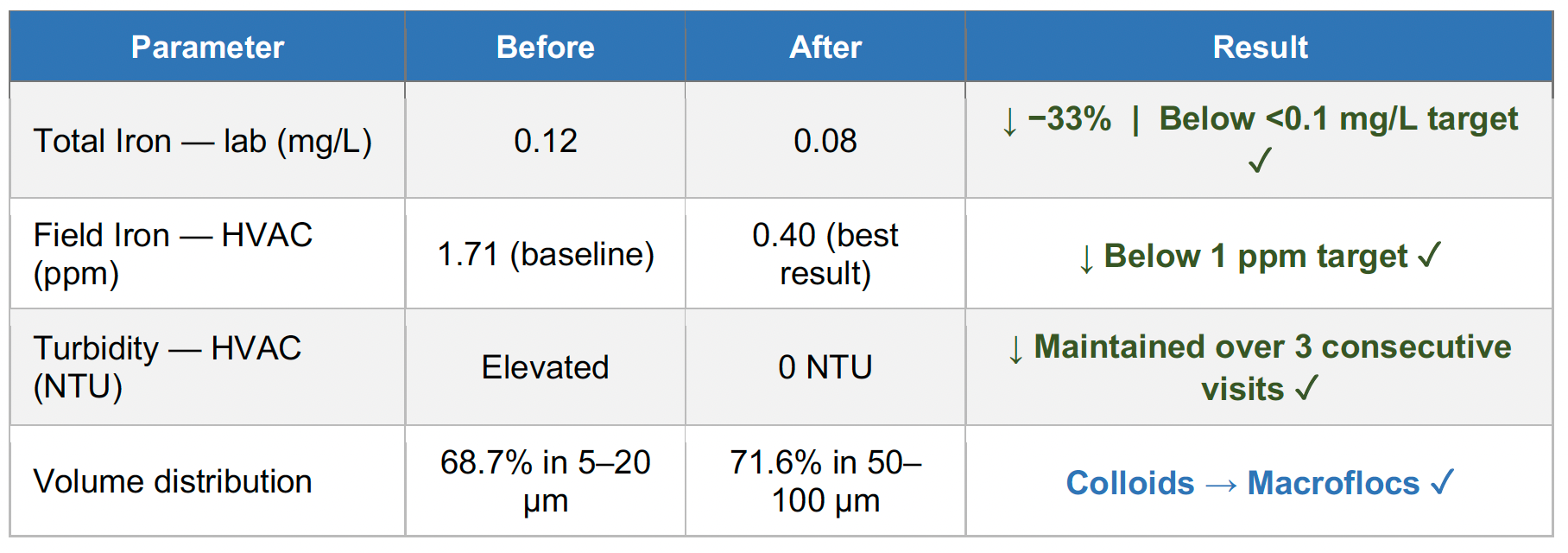
- 33% reduction in laboratory-measured iron levels (0.12 mg/L to 0.08 mg/L)
- Field iron reduced from 1.71 ppm to 0.40 ppm
- Turbidity reduced to 0 NTU
- Turbidity maintained at 0 NTU over three consecutive monitoring visits
- Particle distribution successfully shifted from colloidal contamination to filterable macroflocs
The treatment also improved filtration performance by allowing contaminants to be captured on the surface of the filter cartridges rather than penetrating deep into the media, which is expected to extend cartridge service life and improve maintenance efficiency.
Why It Matters
In many closed-loop HVAC systems, water quality problems aren't caused by the amount of contamination present, but by the size of the particles carrying that contamination.
Fine colloidal iron particles can remain suspended indefinitely, creating turbidity, contributing to fouling, and making filtration far less effective.
By converting those particles into larger, filterable macroflocs, the filtration aid program addressed the root cause of the problem rather than simply treating the symptoms.
The result was cleaner water, lower iron levels, improved filtration performance, and a more reliable HVAC system without the need for major equipment upgrades.
This project highlights how the right treatment strategy can restore water quality and improve system performance, even when conventional filtration alone is no longer enough.
Months before starting the filter aid vs. System controlled with corrosion inhibitor 1st filter changed with filter aid
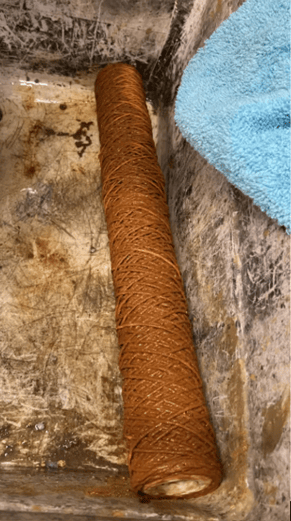
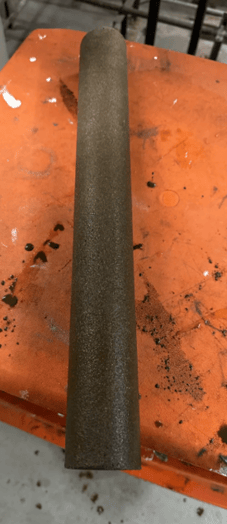
2nd filter changed
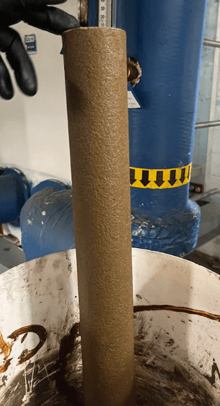
3rd filter changed. Cross-section of spent filter cartridges showing concentric iron oxide deposit layers
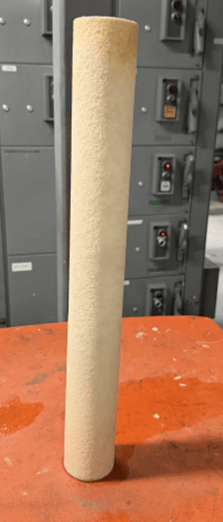
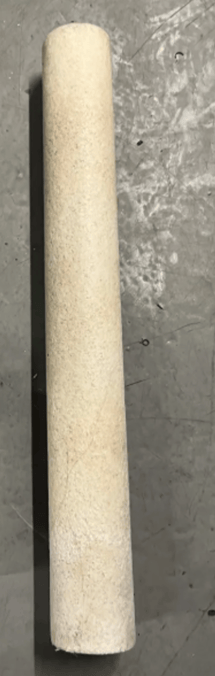
4th filter changed.
Related Articles
The Role of Water Treatment in Food & Beverage Product Quality
In the food and beverage industry, water is much more than a basic utility, it’s a core ingredient....How Water Safety Plans Support Pharmaceutical Water Quality Assurance
In pharmaceutical manufacturing, water isn’t just a utility, it’s a critical ingredient. Whether....png?width=1620&name=wmc%20-%20logos%20footers%20(1).png "wmc - logos footers (1)")