
.jpg)
WMC WATER MANAGEMENT
Cooling Tower Water Treatment Solutions Across Ontario And Quebec
WMC offers a wide range of cooling water management services to enhance the performance and efficiency of your system, including:
Tailored Water Management Programs
Rely on our team of industry-leading specialists to design a custom water management program for your cooling system to minimize scale, corrosion, fouling and microbiological activity. Reap the benefits of lower operating costs, longer equipment life and most importantly, less unplanned downtime.
Expert Application of Proven Technologies
Our qualified technicians ensure the correct and efficient application of conventional and specialized treatment processes (including passivation, remediation, cleaning and disinfection), ensuring the highest standards in maintaining the performance and condition of your cooling tower.
.png "wmc - website photos (1)")
Effective Solutions for Common Water Treatment Problems
Evaporative cooling systems are a challenge to treat properly. Many serious issues can arise from inadequate water treatment, including:
Corrosion
Water is a universal solvent. It will slowly corrode any metal surface it is in contact with. In a cooling tower system, water is continuously in contact with system metals (in the basin, piping, hot deck, nozzles, pumps etc.). Waterside surfaces throughout the entire cooling system (not just the cooling tower itself) will corrode rapidly if not treated properly, resulting in shortened equipment life and costly repairs.
Scale Formation
Scale can be defined as a hard mineral deposit formed by precipitation of dissolved solids when their concentrations exceed the solubility limit of the cooling water. Calcium carbonate is the most common type of scale, but a variety of scales can be formed from calcium, magnesium, iron and silica.
Scale presents a significant problem due to its tendency to form very hard, insulating deposits on heat transfer surfaces, including chiller tubes and tower fill. These deposits greatly inhibit heat transfer and reduce cooling efficiency, which results in higher operating costs. If not kept under control, the scale will inhibit heat transfer to the point where a system shutdown and full system cleaning & descaling is required to restore cooling.
Microbiological Contamination
Algae, bacteria and other microbes thrive in the warm and humid environment inside cooling towers. Biological contamination can lead to serious concerns, including greatly reduced heat transfer efficiency (from slime and biofilm), under-deposit corrosion, biofouling, and potential health risks when there is a potential for human exposure to waterborne pathogens.
Fouling
In contrast to scale which forms from precipitation of dissolved solids, foulants can be described as deposits caused by settling of suspended matter. Any contaminant present in the cooling water can be a potential foulant. This includes both waterborne contaminants (mud, sand, silt, oil, biological matter, process material etc.) and airborne ones (dust, dirt, pollen, leaves, insects, or airborne material from a nearby process). Fouling can lead to a wide variety of issues that present similar symptoms to other types of deposits, but may require different or even highly specialized response and remediation.
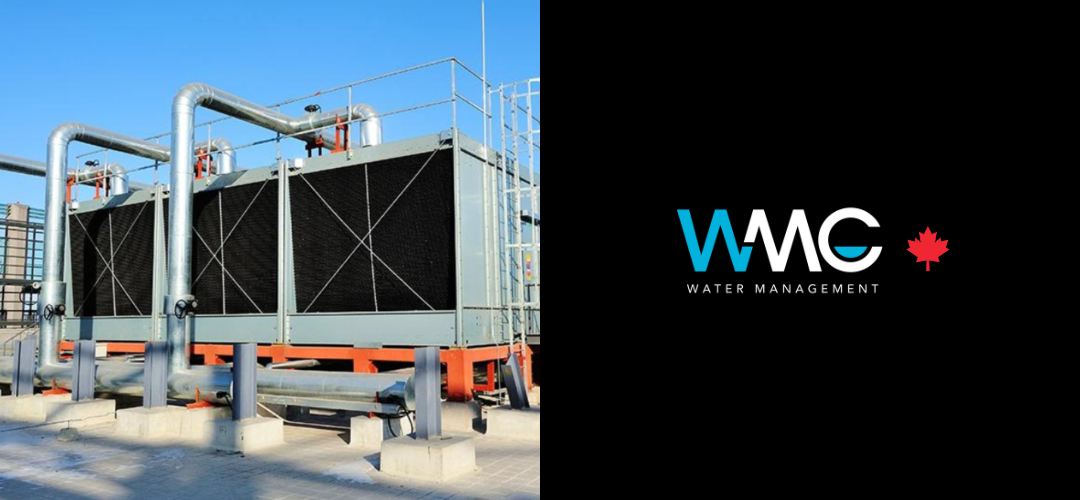
Our Approach to Cooling Water TreatmenT
WMC builds water treatment programs from the ground up to meet the following objectives:
Objective #1: Minimize System Operating Costs
Maintain maximum heat transfer efficiency by preventing scaling, fouling and biofilm formation. Achieve maximum cycles of concentration to conserve water, energy and treatment chemicals.
Objective #2: Prolong Life of Cooling Equipment and Related Infrastructure
Prevent deposits on heat exchange surfaces which can lead to blockages and failures. Minimize corrosion rates of system metals by maintaining optimal water chemistry.
Objective #3: Reduce Downtime
Minimize fouling to reduce frequency and duration of maintenance and cleaning operations. Minimize corrosion rates to reduce the frequency of repairs and replacements. Prevent excessive foaming, which can disrupt operation. Control microbiological activity to avoid unplanned shutdowns and emergency disinfections.
Objective #4: Protect the Environment and the Public
Reduce water, energy and chemical consumption to minimize environmental footprint. Follow best practices for water safety, including Legionella risk management. Ensure that all of our products and services are delivered to you safely, responsibly and to an exemplary standard.
In Practice: Achieving Your Objectives
Our treatment programs leverage proven technology and unmatched industry expertise to deliver optimal results from your cooling system.
Automatic Bleed Control
Automated bleed is the primary method of controlling water chemistry in open cooling systems. Before any chemicals are added, the total dissolved solids must be kept under tight control. Inadequate bleed leads to scale and sludge formation, as well as increased biological load. On the other hand, excessive bleed wastes water, energy and chemicals, and can increase corrosion rates.
Scale & Corrosion Inhibitor
The primary chemical water treatment additive is known as a scale & corrosion inhibitor. The specific formulation used in your system will depend on several factors, but in general it will contain a blend of corrosion inhibitors to protect system metals, as well as conditioning polymers to help keep scale- and sludge-forming materials in solution. Addition of inhibitor at the correct dosage will minimize corrosion rates, help prevent scale and reduce fouling, and may allow the system to run at higher cycles of concentration than would be possible without chemical treatment.
Microbiological Control
Control of microorganisms in evaporative cooling systems is critical to minimizing operating costs, preventing system failures and downtime, and protecting human life. The proven approach to controlling microorganisms is to implement a two-step biocide program which combines an effective oxidizing biocide with a secondary non-oxidizing biocide + slimicide.
Use of oxidizing biocides (such as hypochlorite) alone is not recommended, due to the tendency of many organisms (such as bacteria) to encapsulate themselves or hide underneath a biofilm. For this reason, the secondary biological control agent is used to break down biofilm and allow the oxidizer to destroy the exposed organisms in the bulk cooling water.
Expert Service
No amount of expensive equipment or advanced chemistry will keep a system under control without competent implementation, service and monitoring. That’s where WMC comes in. Our engineers and field service technicians are with you every step of the way, acting as your partner to help keep your cooling system operating at peak performance. Only with a competent, confident and capable service program can you truly expect to drive down operating costs, prolong the life of your equipment and eliminate unplanned and unnecessary downtime.
Cooling Tower Water Treatment Services Backed by Ongoing Management
Cooling tower water treatment services require continuous control of water chemistry and system conditions to remain effective. WMC delivers managed programs designed to maintain performance across operating environments for long-term system reliability.
End-to-End Cooling Tower Water Treatment Programs
WMC provides comprehensive cooling tower water treatment programs, from system assessment and program design to implementation and ongoing optimization.
Each program is structured to align with system demands and includes:
- Scale Control: Managing dissolved minerals through chemical treatment and bleed control
- Corrosion Control: Safeguarding system metals using inhibitors and controlled water chemistry
- Fouling Control: Removing suspended solids through filtration and program design
- Microbiological Control: Using oxidizing and non-oxidizing biocides to manage biological activity
- System Stability: Monitoring control ranges and program adjustments to maintain performance
This approach ensures stable heat transfer, controlled water usage, and reduced risk of unplanned system disruptions.
Ongoing Monitoring, Optimization & Expert Service
Cooling tower water treatment requires routine monitoring and adjustment to maintain control. WMC provides ongoing service programs that include:
- Tracking system performance through inspections and on-site testing
- Conducting analysis from system trends (e.g., conductivity, pH, biological activity)
- Responding to changing conditions
Continuous oversight helps identify issues early, rather than waiting until they affect efficiency. Facilities benefit from consistent performance and reduced variability across operating cycles.
Cooling Tower Water Treatment Services Across Ontario & Quebec
WMC provides cooling tower water treatment services across Ontario and Quebec, for facilities in the commercial, industrial and institutional sectors.
Our regional service coverage allows for:
- Consistent program delivery across multiple sites
- Faster response for operational support and adjustments
- Alignment with local regulatory and water quality requirements
For organizations managing multiple cooling systems, this enables standardized oversight while accounting for site-specific operating conditions.
Cooling Tower Treatment Within a Complete Water Management Strategy
Cooling tower performance is directly influenced by upstream and adjacent water systems. WMC integrates cooling tower water treatment within a broader, coordinated water management strategy.
Depending on specific needs, programs may include:
- Boiler water treatment programs
- Pre-treatment and filtration systems
- Industrial wastewater treatment services
- Water safety plans for system-wide risk management
- Legionella testing and monitoring protocols
Integration across these systems improves water quality control and reduces cross-system risk, while supporting regulatory alignment across the facility.
GET STARTED TODAY - COOLING WATER TREATMENT SOLUTIONS
WMC offers turn-key cooling water treatment solutions, including design and implementation of complete Water Management and Water Safety Programs. Contact your WMC representative to schedule a consultation, and our program team will work with you to develop a comprehensive water management solution tailored to the specific needs of your facility.



.png?width=1620&name=wmc%20-%20logos%20footers%20(1).png "wmc - logos footers (1)")