
The Challenge
Scale buildup in cooling tower systems is often invisible in the early stages, but its impact on performance and energy consumption is significant. A facility operating a 1,000-ton chiller system was experiencing rising energy costs without a clear mechanical issue.
What We Found
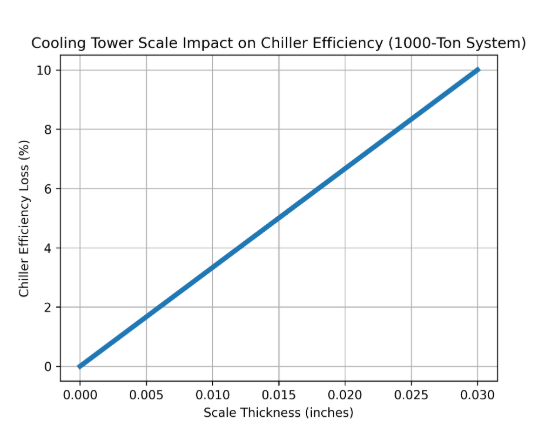
Even minimal scale buildup had a measurable impact on system efficiency.
As scale thickness increased, chiller efficiency dropped in a near-linear pattern:
- 0.015” of scale resulted in approximately 5% efficiency loss
- 0.030” of scale resulted in approximately 10% efficiency loss
This level of buildup is not always visible during routine inspections, but it forces the system to work harder to achieve the same cooling output.
The Cost Impact
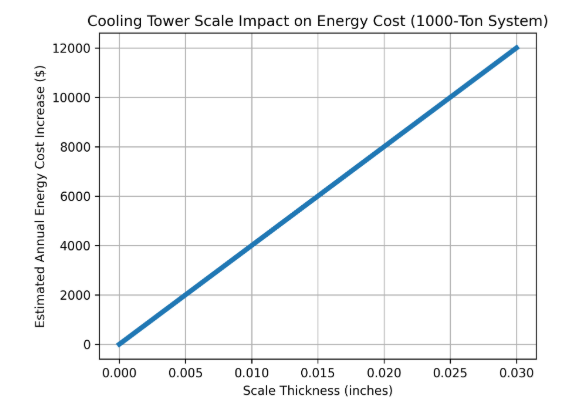
That efficiency loss translates directly into higher energy spend.
For a 1,000-ton system:
- 0.015” of scale = ~$6,000/year in wasted energy
- 0.030” of scale = ~$12,000/year in wasted energy
These costs compound over time, especially in facilities with continuous cooling demand such as healthcare, manufacturing, and large commercial buildings.
Why It Matters
Scale acts as an insulating barrier on heat transfer surfaces. The thicker it becomes, the more energy is required to maintain performance. Without proper water treatment and monitoring, this leads to:
- Increased operating costs
- Reduced system efficiency
- Higher risk of long-term equipment damage
How WMC Water Helped
WMC Water conducted a system assessment and identified early-stage scale buildup that was impacting performance.
By implementing a targeted water treatment program and optimizing system chemistry, the facility was able to:
- Restore heat transfer efficiency
- Reduce unnecessary energy consumption
- Prevent further scale accumulation
Related Articles
Case Study: Dome Staining on Beer Cans at a Brewery | WMC Water
The Problem: A brewer was experiencing dome staining on their beer cans, leading to customer...WMC Insights Q2 2026: Cooling Tower Readiness, Healthcare Water Quality & Proactive System Performance
Welcome to the third edition of WMC Insights, your quarterly update on smarter, safer, and more....png?width=1620&name=wmc%20-%20logos%20footers%20(1).png "wmc - logos footers (1)")